Americans are fed up with CEOs that stiff their workers. And one of those fed up Americans happens to be the pope.
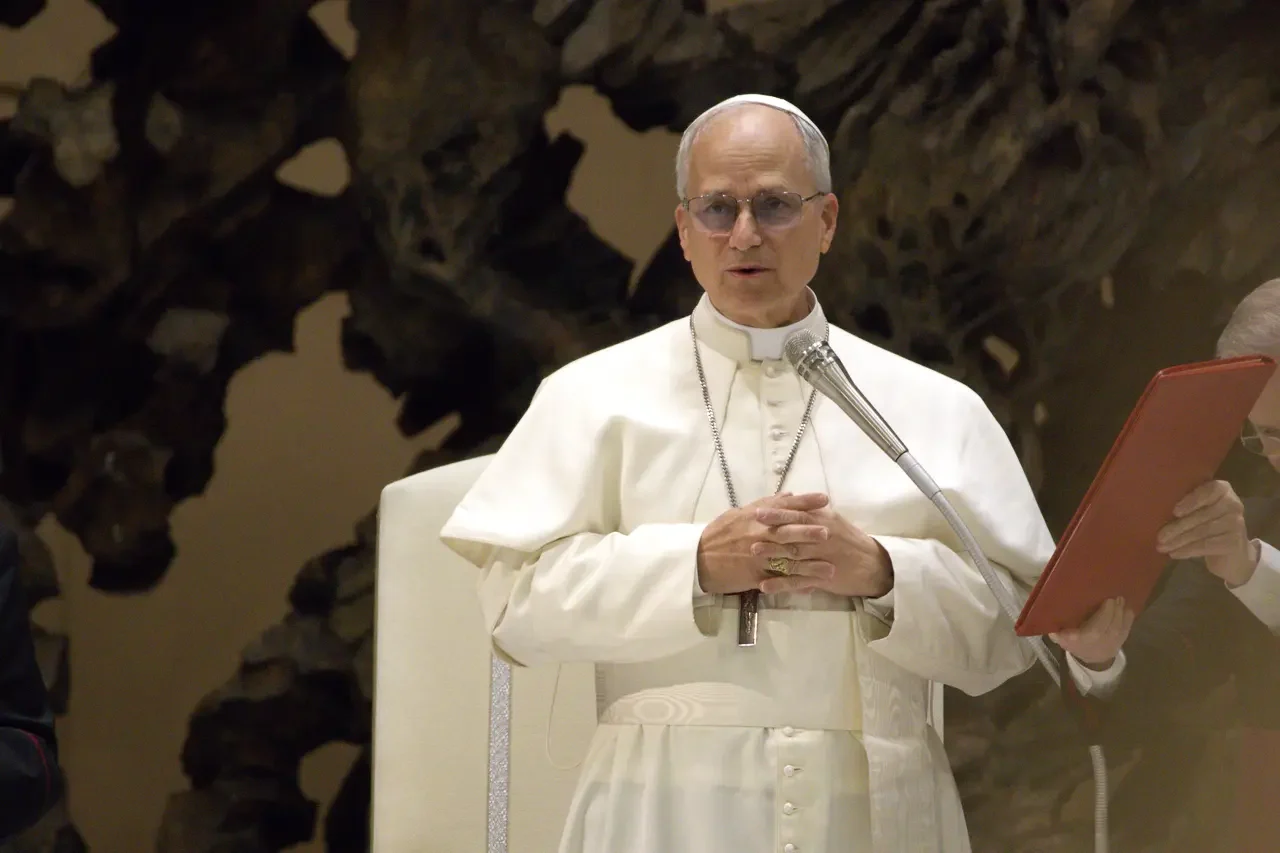
Americans are fed up with overpaid CEOs. And one of those fed up Americans happens to be the pope.
In his first interview since becoming the leader of the Catholic Church, Pope Leo XIV warned about the “continuously wider gap between the income levels of the working class and the money that the wealthiest receive.”
“For example, CEOs that 60 years ago might have been making four to six times more than what the workers are receiving,” he continued. “The last figure I saw, it’s 600 times more than what average workers are receiving.”
He’s right. That figure likely came from a recent report I wrote for the Institute for Policy Studies. We found that CEOs at America’s 100 largest low-wage employers now take home, on average, 632 times more than their median workers.
That kind of inequality means big trouble for our economy and democracy. But policymakers have the tools to curb this CEO greed. One particularly promising solution: tax hikes on companies with huge gaps between their CEO and median worker pay.
A recently introduced bill, the Tax Excessive CEO Pay Act, would add a tax of 0.5 percentage points on companies with CEO-worker pay gaps of 50 to 1. It would top out at an extra 5 percentage points on firms that pay their CEO more than 500 times median worker pay.
At the Institute for Policy Studies, we ran the numbers on 10 leading U.S. corporations with large pay ratios.
We found that Walmart, with a five-year average pay gap of 1,091 to 1, would have owed as much as $929 million in extra federal taxes in 2024 if this legislation had been in effect. Amazon, with an even wider gap of 1,995 to 1 and higher profits, would’ve owed as much as an additional $3.1 billion last year.
Home Depot would have owed as much as $725 million more in 2024 taxes under this legislation. Like most of these companies, the home improvement giant can’t claim to be short on cash.
Over the past six years, they’ve blown nearly $38 billion on stock buybacks, a maneuver that artificially inflates a CEO’s stock-based pay. With the money the firm spent on stock buybacks, Home Depot could’ve given every one of their 470,100 employees six annual $13,423 bonuses.
If Elon Musk receives the full $975 billion compensation package that Tesla’s board has proposed, Tesla could owe up to $100 billion more in taxes over the next decade under this legislation.
Polling suggests that Americans across the political spectrum would support the bill.
One 2024 survey, for instance, found that 80 percent of likely voters favor a tax hike on corporations that pay their CEOs more than 50 times more than what they pay their median employees. Large majorities in every political group gave the idea the thumbs up, including 89 percent of Democrats, 77 percent of independents, and 71 percent of Republicans.
In these hyper-polarized times, Americans of diverse backgrounds, faiths, and political perspectives seem to share enormous common ground on at least one problem facing our nation: the extreme economic divides within our country’s largest corporations.
Sarah Anderson directs the Global Economy Project at the Institute for Policy Studies and releases its annual “Executive Excess” study of CEO pay. This op-ed was adapted from Inequality.org and distributed for syndication by OtherWords.org.