Clarion Native Tackles Food Access with Hydroponics
by Amanda Rink, Editor
For lifelong Clarion resident Cole Lindaman, the path from growing up on an acreage to designing a hydroponics farm inside Wright Community Connections (WCC) has always been about one simple idea: everyone deserves access to fresh, healthy food.
“I grew up in Clarion and lived here my entire life before going to college,” Lindaman said. “Much of the fruits and vegetables I ate growing up were from our own acreage. However, many people don’t have the space or knowledge to be able to grow their own food.”
Now, thanks to a $9,500 grant from Bayer Fund, Cole’s vision is becoming a reality through the Fresh Pathways Project. The project will house an indoor hydroponics farm at the WCC Center, producing vegetables year-round while also serving as a hands-on learning space for community members.
The Wright County Monitor was invited to tour the new indoor farm at WCC. At first glance, the space might look like a simple greenhouse, but it’s much more than that.
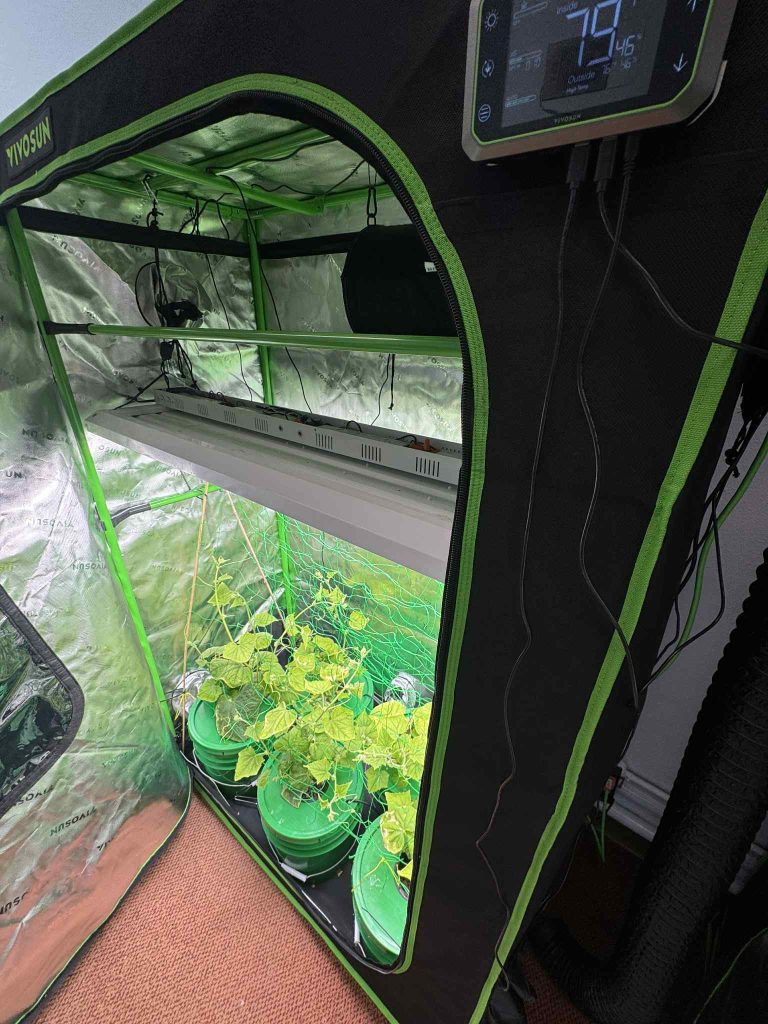
Rows of leafy veggies stretch across the room, thriving under the glow of bright LED lights. The lights, which are highly energy-efficient, provide the plants with the conditions they need to grow year-round. Along each tray, thin, clear water lines deliver the nutrients that make up the “hydroponics” of Lindaman’s operation. 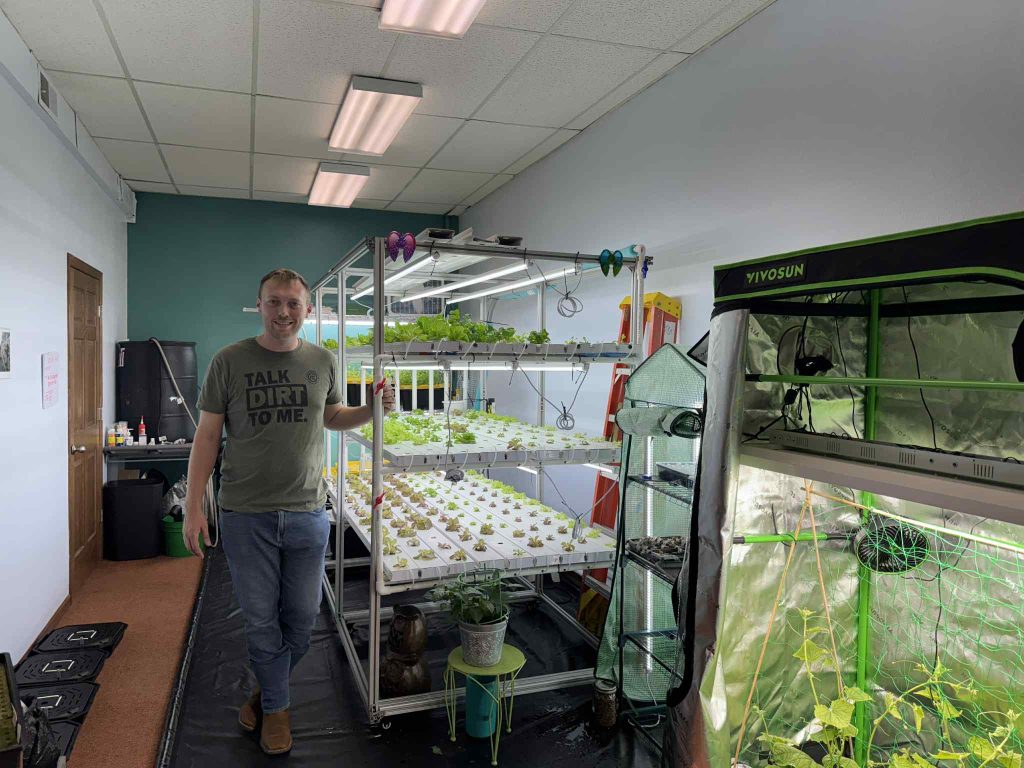
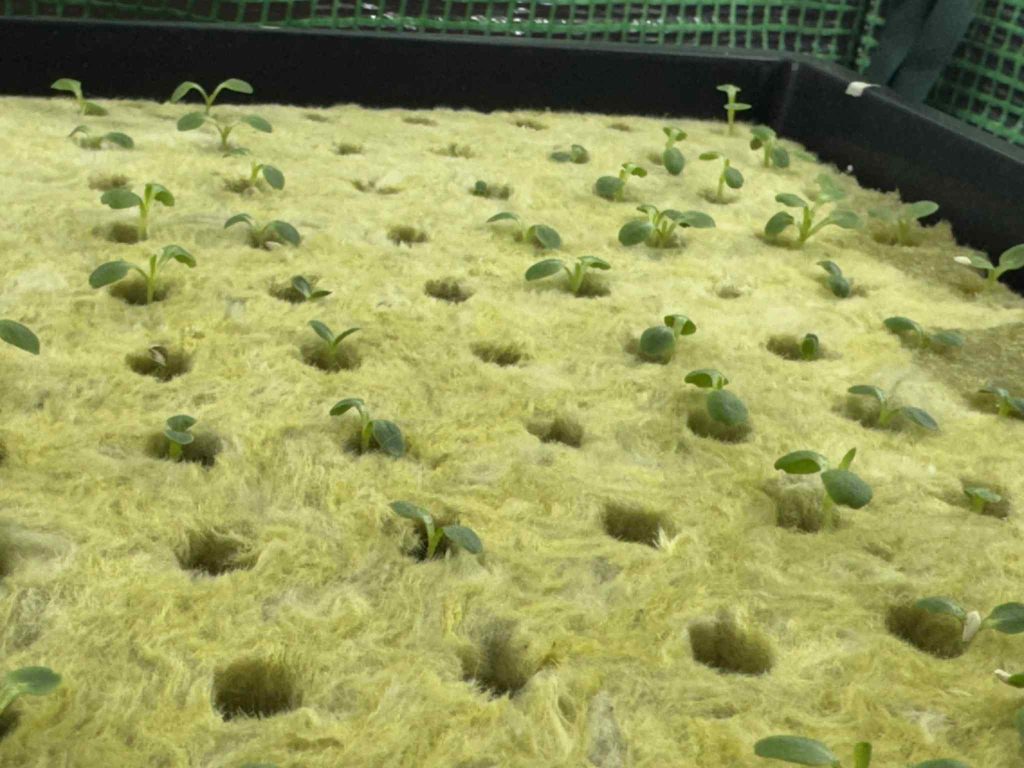
Before the plants reach the trays, they begin in a surprising medium: rock wool, a material made from volcanic rock. Seeds are germinated in a mini greenhouse where warmth and moisture prepare them for the next stage of growth.
Lindaman is experimenting with cucumbers and plans to add tomatoes soon. His work has been inspired by other growers in Iowa, such as Clayton Farms in Ames, where produce is cultivated hydroponically to serve both the community and their own restaurant.
Lindaman’s interest in food access started while studying Civil Engineering at Iowa State University, where he also pursued an Engineering Sales minor.
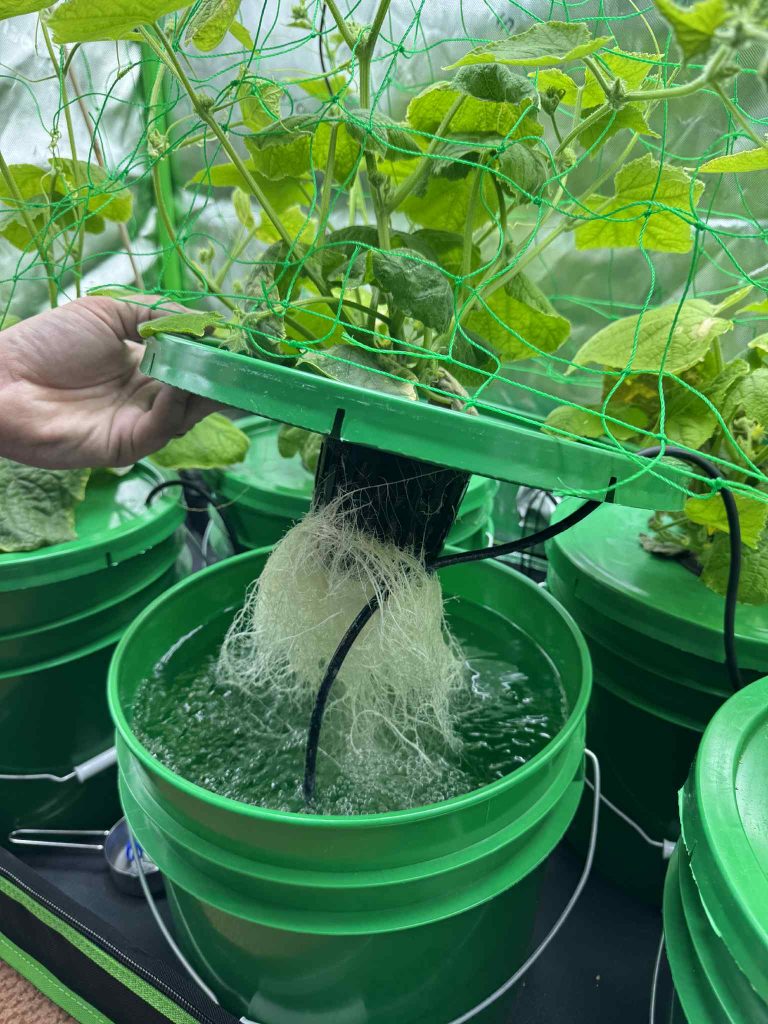
“There I developed a small system designed from a 5-gal bucket,” he recalled. “It really got me thinking about the different ways we could produce more food in unique ways.”
That idea, combined with what he saw growing up in rural Iowa, provided a light bulb moment.
“Personally, growing up in the area, I was able to experience the difficulties of eating healthy in a rural setting,” he said. “Despite being lucky enough to have grocery stores in our larger communities, accessibility is still limited.”
The statistics back him up: 1 in 6 children in Iowa are food insecure, 90–95% of Iowa’s food is imported, and 1 in 4 Iowans don’t eat a serving of fruits or vegetables daily.
“To me, food access is one of the fundamental issues that we need to address if we really want to make the world a better place,” Lindaman said. He thinks hydroponic technology will be key to making this change.
Hydroponic farming allows plants to grow indoors without soil. Instead, plants are given the basic needs, light, water, and nutrients, in a controlled environment.
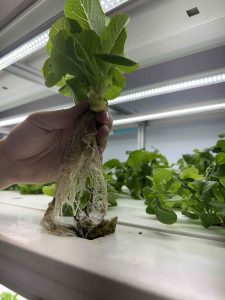
“As long as you can get these things to the plant, they are actually extremely flexible in where they can grow,” Lindaman explained. “For hydroponics, we provide these in a way that allows us to grow indoors year-round. We use LEDs to provide the light, filter regular tap water to provide to the plants, and utilize a nutrient ‘salt’ that dissolves in the water and is absorbed by plants.”
The produce grown at the farm will be available for purchase at the WCC Center. Lindaman said the goal is to create a self-sustaining model where produce sales help cover farm costs and fund other community programs.
“At the same time, we want to make sure that we are making more food accessible to all levels of the community,” he said. “As we are getting into the operations phase of the project, we want to create opportunities to get the produce to additional portions of the community that may be underserved.”
Farms cover nearly 90% of Iowa’s land, yet most of those farms do not produce food for people to eat directly. In fact, Iowa imports roughly the same percentage of its food, about 90%, according to a study by the Leopold Center for Sustainable Agriculture.
That reliance on imported food comes with both direct and indirect costs, especially in transportation. The average item in a grocery store has traveled nearly 1,500 miles before reaching a plate in Iowa. By contrast, produce purchased from local farmers, whether from Lindaman’s hydroponics farm or a farmers’ market, typically travels just 50 miles. The difference not only reduces costs and environmental impact but also supports the local economy while advancing community efforts to fight food insecurity.
For Lindaman, access to healthy food goes hand in hand with rural health. “Rural communities across the country are facing increased issues related to health and wellness. While maintaining access to rural healthcare is important, individuals and communities can create better health outcomes by ensuring that there is a source of nutritional food,” he said.
Local food production, he added, also builds trust. “You see the entire process. This is really important as a building block to connect the community in other ways.”
And while Clarion is the starting point, Lindaman believes the WCC model could grow well beyond Wright County.
“I think the model we are creating at WCC could serve as a valuable tool to get people thinking about their food more and start to think about how their diets could be changed,” he said. “The space and methods to grow the food may be different in each community but the goal of teaching while growing can benefit any community.”
Beyond food sales, the farm will be a hands-on learning hub. Volunteers will be able to help with seed starting, harvesting, and packaging, while classes, planned in partnership with ISU Extension and other groups, will teach residents how to implement these methods at home.
With support from Bayer Fund, Iowa’s Farmer Union, and the hard work from those at WCC, the Fresh Pathways Project is more than food.. it is a seed of hope, planted right on Clarion’s Main Street.
For more information, please visit WCC at 215 N Main St., Clarion, Iowa 50525.