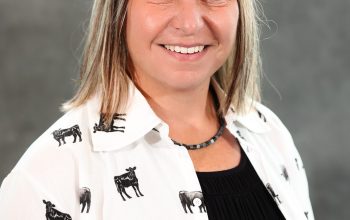
By Casey Jarmes | The News-Review
NORTH ENGLISH – Levi Lyle, a Keota farmer, science teacher, and poet gave a presentation titled “Alternatives in Agriculture” at the English Valleys History Center on August 31. Lyle is a sixth generation farmer who grew up in Keota. He moved back and began farming corn and soybeans 15 years ago.
Lyle discussed his farm and the organic methods he uses, including cover crops, crop rotation, a rolling crimper, and weed zapping. Lyle stated that these methods give him similar yields without using chemicals or destroying the soil. Lyle showed the attendees footage of his roller crimper and weed zapper in action and sang songs he wrote about the two pieces of equipment. He also spoke about the aronia berries, tart cherries and honeyberries he grows on his farm.
Lyle is an advocate for diversified agriculture, who sees his farming methods not just as a way to grow crops, but as something that goes beyond agriculture.
“There’s this thing, in regenerative agriculture, that belief that systems are connected and that, if we undo too many things, that system starts to come apart. Soil erosion and the depletion of nutrients, all the things that we hear that are negative in agriculture,” said Lyle. “Well, it’s not just systems thinking in agriculture that is important, when we talk about regenerative. For me, I look back at what we’ve done in the last 100 years or so, and how we attempted, in our culture, to undo systems or reverse engineer them in order to believe that we are being more efficient, and therefore it must be better. And so, it’s often the case that, when we undo a system in nature, we are causing more harm, or things that we don’t account for. The impacts on soil, water and air being some, but when you’re a business and you go to speak with your accountant, they’re just looking at your bottom line in dollars. In those cases, in the business world, too often we’re not looking at the impacts on rural communities, or the impacts on defunding our education, or social services, the things that are in some ways really really struggling at this point in time. When I speak about systems, and when I talk about regenerative agriculture, I’m really talking about all that.”