
By Casey Jarmes | The News-Review
Sigourney – “Shall the Board of Directors of the Sigourney Community School District in the County of Keokuk, State of Iowa, be authorized to contract indebtedness and issue General Obligation Bonds in an amount not to exceed $9,900,000 to provide funds to remodel, repair, and improve the existing junior / senior high school, including HVAC, fire alarm, mechanical, plumbing, and security improvements?”
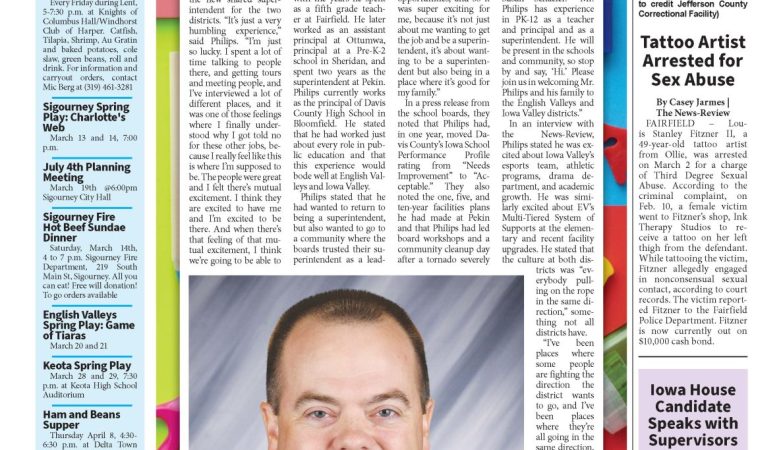
This question will be up to voters in the Sigourney School District to decide in the upcoming election, held on Nov. 4. If this bond referendum passes, the high school will begin a large-scale infrastructure update, similar to the infrastructure update carried out at the elementary over the summer of last year. This vote comes after months of planning and community involvement, including surveys sent out to households, meetings with staff and students, and the creation of a community task force to help decide which updates to prioritize.
The district held two open-houses, on Oct. 15 and 22, where members of the public were given an overview of the project and given a tour of the school building, which opened in 1967. Superintendent Kevin Hatfield stated that the planned updates, requested by staff, students and the community, were practical, basic upgrades. He stated that there is not a full design for the project yet, just a basic outline and items they plan to focus on. Hatfield noted that the elementary upgrade, which was funded by borrowing against the district’s SAVE dollars, ended on time and under budget.
Hatfield explained that the following updates are planned:
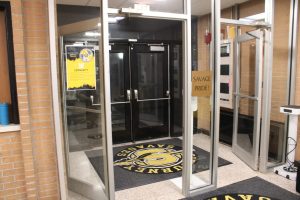
-Adding a new secure front entrance with a pass-through visitor check-in and student services area. Hatfield explained that this would add a “person trap” like the one at the elementary, where guests will need to scan an ID before being let into the office, and then let into the school. Hatfield also stated that they will need to add similar security measures at the back entrance.
-Upgrading the fire alarms and adding voice-annunciation. Hatfield explained that the current alarm system has false alarms once a week and contains parts that can’t be replaced.
-Adding ADA-compliant exterior and interior doors.
-Complete restroom renovations, including renovating the restrooms to make them ADA compliant. Hatfield explained that the current restrooms are too cramped for someone in a wheelchair to use and that they planned to renovate the restrooms by the cafeteria, the ones by the high school gym, and the restrooms by the south door in the junior high.
-Replacing and upgrading classroom heating and cooling units. Hatfield explained that many classrooms have 50-year-old heaters that leak and that some of them do not work. Maintenance Director Jason Shifflett stated that he has to scavenge parts off other heaters to keep them running.
-Upgrading the gym HVAC for better airflow and dehumidification. Hatfield explained that the gym ventilation doesn’t work properly, resulting in it getting hot and sweaty, which forces them to sometimes stop volleyball games because of the humidity. He clarified that they would not be adding air conditioning, but would be increasing airflow in the gym.
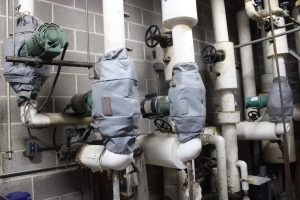
-Installing new water heaters and hot water piping. Shifflett stated that years of hard water had been hard on the boiler system and that it was difficult to turn some of the valves. He stated that it currently works fine, but that they will have problems with the boilers in the future.
-Removal and abatement of asbestos flooring.
-Improving lunchroom access and circulation.
-Updating the main electrical systems and distribution.
-Adding a new energy management control system.
-Replacement of aging sanitary and water lines.
If the bond referendum passes, district residents will have to pay $2.70 per $1,000 of taxable property over the course of twenty tears. Hatfield compared this to giving up a pizza every month. He noted that the district’s tax rate had gone down in recent years; ten years ago, the tax rate was $14.36 per $1,000, compared to the current $11.36. Hatfield stated that, despite the higher rate, the district didn’t upgrade the school in the past. He stated that, unlike most districts, Sigourney hasn’t had debt for 15 years, but that they needed to now borrow money for larger projects. Hatfield explained that there is a tax calculator on the school website residents could use to see how much they would have to pay if the referendum passes.
He explained that the district receives approximately $350,000 in Physical Plant & Equipment Levy (PPEL) funds and $350,000 in Secure an Advanced Vision for Education (SAVE) funds each year. He stated that half of this goes towards maintenance and half is used for buses or new technology. Hatfield stated that, by the end of the year, 3/4 of that $700,000 is used up, and that they would only be able to do one bathroom with that money.
Matt Gillaspie of investment bank Piper Sandler explained that most homes qualify for multiple tax credits, like the homestead tax credit, and that there are other tax credits for seniors, veterans and farmers available. He explained that agriculture land is taxed not based on market value, but rather based on its productivity, which is much lower. He estimated that the average farm would be taxed based on 10% of market value, coming out to around $3.10 per acre per year. Gillaspie stated that, as property values go up, the $2.70 tax rate could go down to compensate. Alternatively, the school board could continue to levy for $2.70 and use that extra money to pay the debt off faster, meaning the levy would end in less than twenty years.
An attendee asked about something he’d heard about the Iowa Senate wanting to get rid of tax rollbacks. Gillaspie stated he didn’t think that would happen, because the rollbacks are so ingrained and because the system works. He stated that the legislature dislikes rollbacks because they’re confusing, not because they don’t work. He stated that, if the rollbacks were removed, this would vastly change how property was assessed and double residential taxes, something that was absolutely unfair. He stated the legislators realized last session how much of an impact getting rid of rollbacks would have and that they would not get rid of it, but may put caps on levies.
An attendee asked Hatfield what the plan b was, if the referendum failed. Hatfield stated that they may have to deal with system failures, but would “bandaid” things the best they could. He stated they may have problems heating the school fully. Hatfield stated that they would do what they could out of PPEL and SAVE, but that they still needed those funds for maintenance and new buses. He stated he believed that, if the referendum failed, the public would bring it back a few years later. Hatfield stated that the difficult thing was that, if the referendum fails and passes a few years later, everything will cost 10% more and they will not be able to repair as much. Hatfield said that, if the referendum fails, they’re just “kicking the can down the road.”
An attendee asked what things they weren’t planning to fix. Hatfield stated they were focussing on the biggest units and systems in the school. He stated that they were not planning to remodel classrooms, add more bathrooms, extend the gym, or add a new weight room, all ideas discussed during community meetings. He stated that, even if they wanted to, they don’t have a good enough electrical grid for all those updates. Hatfield stated that the plans didn’t contain “frills” or “bells and whistles” and just focussed on basic systems, ADA compliance and security. He stated that he wasn’t sure what they would cut if the bond referendum was pushed back a few years.
An attendee asked if the updates would affect classtime. Shifflett stated that the contractors wouldn’t plan more than they could do over the summer. Board member Tim Bruns stated that the project would be done in phases, with little class interruption, and was still in the planning phase.
After Hatfield and Gillaspie’s presentations, those attending the open house were given a tour of the school entrance, gym, boiler room, and a high school math classroom. While touring the classroom, Daryl Wood, who was a member of the community group earlier in the year, noted that the classroom had the same heating unit from when he graduated 44 years ago. Another attendee, Gary Iosbaker, stated that he was part of the first class that went through the high school and that the heater was the same as when he was a student. Wood stated that he’d seen space heaters warming classrooms when the community group took their tour earlier in the year, and that they had to do something, or otherwise would have to begin cancelling school in the winter.
“I’m like everyone else, I think I pay too much in property tax, but the bottom line is, if we don’t do something, if this bond issue doesn’t pass, and we don’t make these improvements to the school, where’s the school gonna be in five to ten years? Is it even going to be here?” said Wood.
“We’ve got to have this school, or we’re not going to have a community,” added Iosbaker.
“We went through that school, it was pretty new. Now it’s our turn to help pay for the generations to come, to have a good school,” Wood said.
Iosbaker stated that, if they wanted their homes to have any value in twenty years, then there would have to be a community around those homes, and that they won’t have a community without the school. He noted that Keokuk County lost 30 people every year and stated they were running out of people. Hatfield noted that residential enrollment had gone down, with the district losing 100 kids in 18 years. However, he stated that school enrollment had begun going up in the last five years. He stated that they haven’t recovered fully, but were getting more kids through open enrollment, because they know that Sigourney has good teachers, good buildings, and a public that loves the school.
“This is the premiere place to be, especially ten-fifteen years from now. This is where people are going to want to send their kids, and so we do have to take care of it. How we do it is up to the public,” said Hatfield.