

By Lowell Washburn

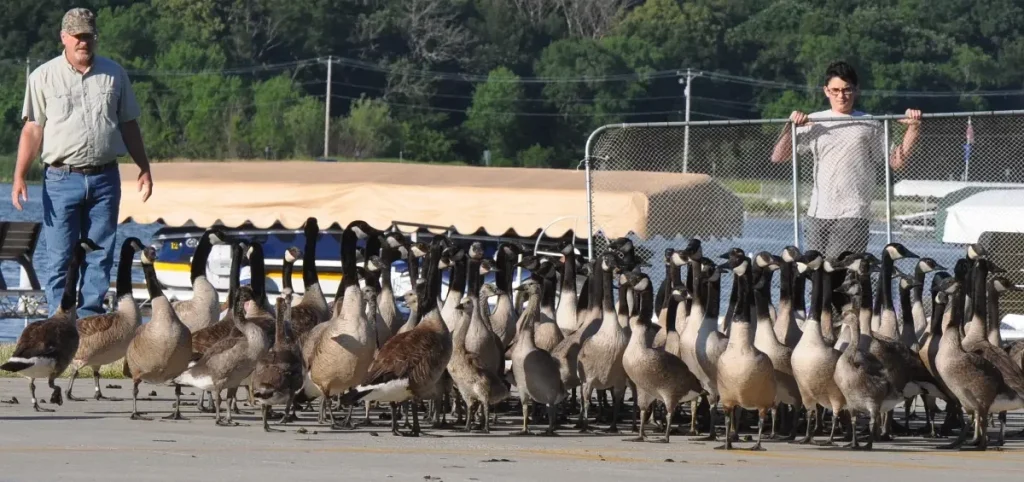
Biologists with the Iowa Department of Natural Resources have completed statewide July goose banding operations. This year, a total of nearly 4,000 Canada geese were successfully captured and banded, according to Orrin Jones, DNR State Waterfowl Biologist.
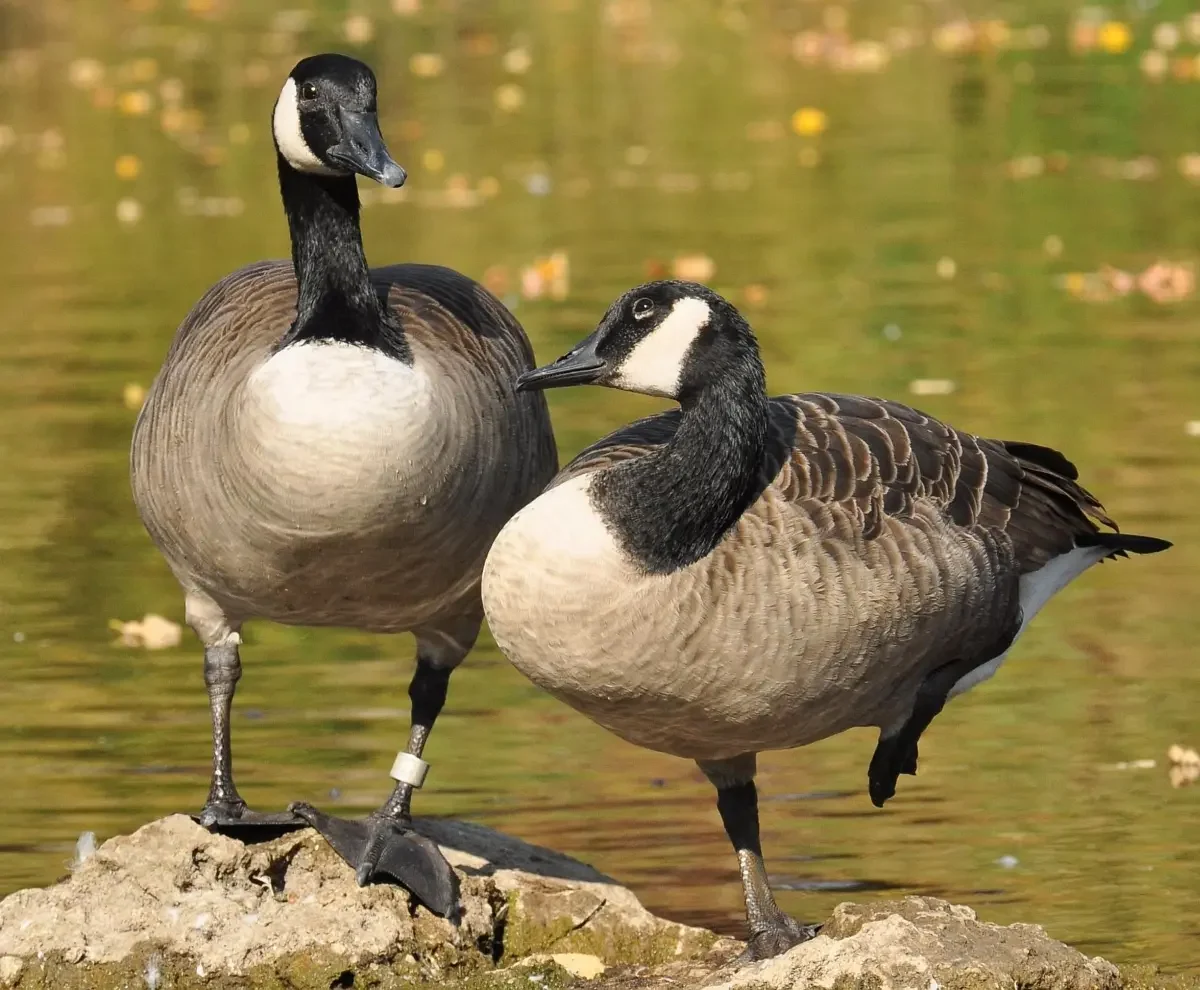
Goose roundups are conducted each July when adult geese become flightless due to the summer molt and while goslings are still too young to fly. After collecting demographic information, each goose is fitted with an individually numbered aluminum leg band that the bird will carry for life. The band number of each goose is registered with the Federal Bird Banding Lab in Laural, Maryland.
“Banding is one of the best sources of information on Canada geese – it allows us to monitor where the birds are captured, where they travel, and where they are recovered [either by a hunter or by the general public]. Band recoveries provide important estimates for demographic rates, survival rates, and recovery rates. That is really the fine scale information that allows us to best manage the population,” said Jones.
Unable to cope with large scale wetland drainage projects and unrestricted hunting, Canada geese disappeared from Iowa in the early 1900s. But as the result of an aggressive, hunter sponsored restoration program, Canada geese have once again become a common nesting species in the state. Today, Iowa hunters annually harvest more than 50,000 Canada geese, giving the species both economic and recreational importance.
Enjoy more wildlife tales online at Washburn’s Outdoor Journal at iawildlife.org/blog