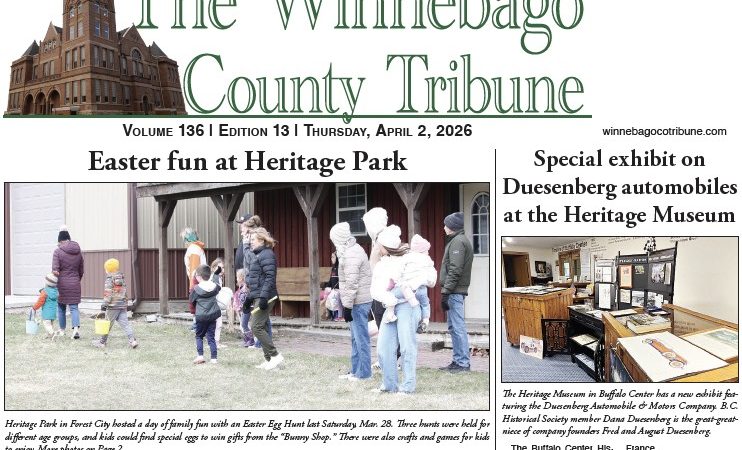

The Winnebago County Tribune began in 1893 as the Buffalo Center Tribune, and was renamed on October 29, 2025 as the newspaper expanded to cover all of Winnebago County as well, upon the final closure of the Forest City Summit-Tribune, which published for the final time the previous day, October 28, 2025. Below, you can read the history of the two newspapers that have served the Buffalo Center and Forest City areas for well over a century.
The Winnebago County Tribune is produced by Editor Andrew Shaw and designer Samantha Stenersen, and is published by Mid-America Publishing based in Hampton Iowa.
To advertise contact Teresa Roth.
Contact Us
The Winnebago County Tribune
Office:
116 W K Street
Forest City, IA 50436
Mail:
PO Box 367
Buffalo Center, IA 50424
Phone: 641-585-0545
Fax: 1-800-340-0805
General Email: info@winnebagocotribune.com
News: news@winnebagocotribune.com
Sports: sports@winnebagocotribune.com
Sales: sales@winnebagocotribune.com
Design: design@winnebagocotribune.com
A division of Mid-America Publishing
9 2nd St. NW
Hampton Iowa, 50441
Phone: (641)456-2585
Office Hours: Our office hours are Monday through Friday 9 a.m. to 5 p.m., Monday – Friday.
Our History
The Buffalo Center Tribune
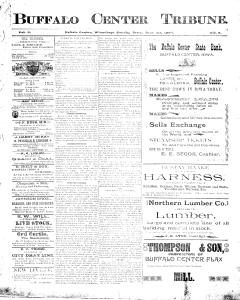
The bustling community of Buffalo Center, in its formative years carved out of the prairie and wetlands of North Iowa, soon came to the realization of the need for a newspaper. Under the ownership of E. M. Wilson, the first issue of the Tribune was published April 23, 1893, and since then has served the community and area as chronicler of news events. And, relative to the successful operation of any community newspaper, the pages included the advertising of local/area merchants who looked to the newspaper as the tool to bring their messages and merchandise before the public.
According to record, the first copy of the Tribune was purchased by E. E. Secor, dated April 23, 1893, who kept the paper as a souvenir. At that time, the paper was a seven-column folio. As time progressed, the pages of the Tribune kept pace and soon local eight-page edition containing four pages of pre-print and four pages of local news happenings and advertising.
Putting a newspaper together called for skills unknown in other businesses as much of the type was set by hand in “composing sticks” and then transferred into columns making up a page.
The advent of the “Linotype” was to revolutionize the face of America’s newspapers and the Tribune, too, took on a new look when the first Linotype was in-stalled.
The machine permitted the operator to set a line of type on a “slug” which solidified the entire line making page makeup much easier and certainly faster. These Linotypes were available with different sizes and type faces which permitted quicker work by employees. The pages of the Tribune were all composed locally, as the pre-print sections were opted out in lieu of more local news.
 The entire process of composing lines of type with these machines was called, in the newspaper jargon, “hot type,” and that it was. The pots on the machines, at 535 degrees,
 contained a combination of lead, antimony and zinc, which, in proper proportions, permitted the metal to solidify into the single line as put out by the Linotype.
The Carman name became associated with the Buffalo Center newspaper business in 1894 when G. M. Carman, who later became publisher, moved to Buffalo Center after securing work at the Tribune plant as a printer. He had previously been employed in newspaper offices in Mason City, Rockford, Manly, Forest City and Emmetsburg.
After 18 months of operation, E. M. Wilson sold the newspaper to a Mr. Sinclair. In 1896 Sinclair sold to J. H. Foster and H. R. Davlin, who later sold to F. B. Miller. There was a steady stream of owners until 1922 when G. M. Carman purchased the business from C. E. Perdue. The owners during this period—after F. B. Miller—included J. P. Boyd, West and Wellington, Charles McGown, W. H. Annette, Glen Laffer, and finally, C. E. Perdue. During the tenure of these publishers, G. M. Carman was on the staff until he purchased the Tribune in July 1922.
In 1898 a second newspaper was started in Buffalo Center. It was published by E. M. Wilson and named the Buffalo Center Globe. Wilson had been unsuccessful in his attempt to re-purchase the Tribune and launched the Globe in an effort to run the Tribune out of business, but his attempt was rebuffed.
After the local confrontation between the two newspapers to meet the needs of the community, Mr. Wilson yielded and sold his Globe to F. B. Miller, then publisher of the Tribune, with the Globe assets incorporated into the Tribune.
The Carmans published the Tribune and later started the Lakota Review, both of which have received the award of general excellence, top award of the Iowa Press Association, and several national awards as well. In 1958 George was named “Master Editor and Publisher,” the highest award a newspaperman can receive in Iowa.
During his ownership of the Tribune, Carman took time to serve his community as mayor, as Winnebago County Legion Commander, he also served on the Winnebago County Conservation Board at its inception and with the Winnebago County Soldier’s Relief Board. He was Winnebago County Republican chairman and, in May, 1964, received the Republican nomination to run for State Representative. Carman was unable to participate in the June election due to his death on May 30, 1964.
In 1952 Mr. and Mrs. Carman constructed a new $50,000 newspaper plant on the corner of North Main and 2nd Avenue NE. A new Miehle II newspaper press, complete with folder; composing tables and an additional Linotype were purchased and installed. The back shop was completed by a Kluge automatic commercial printing press along with a couple of hand-operated presses and banks of handset type.
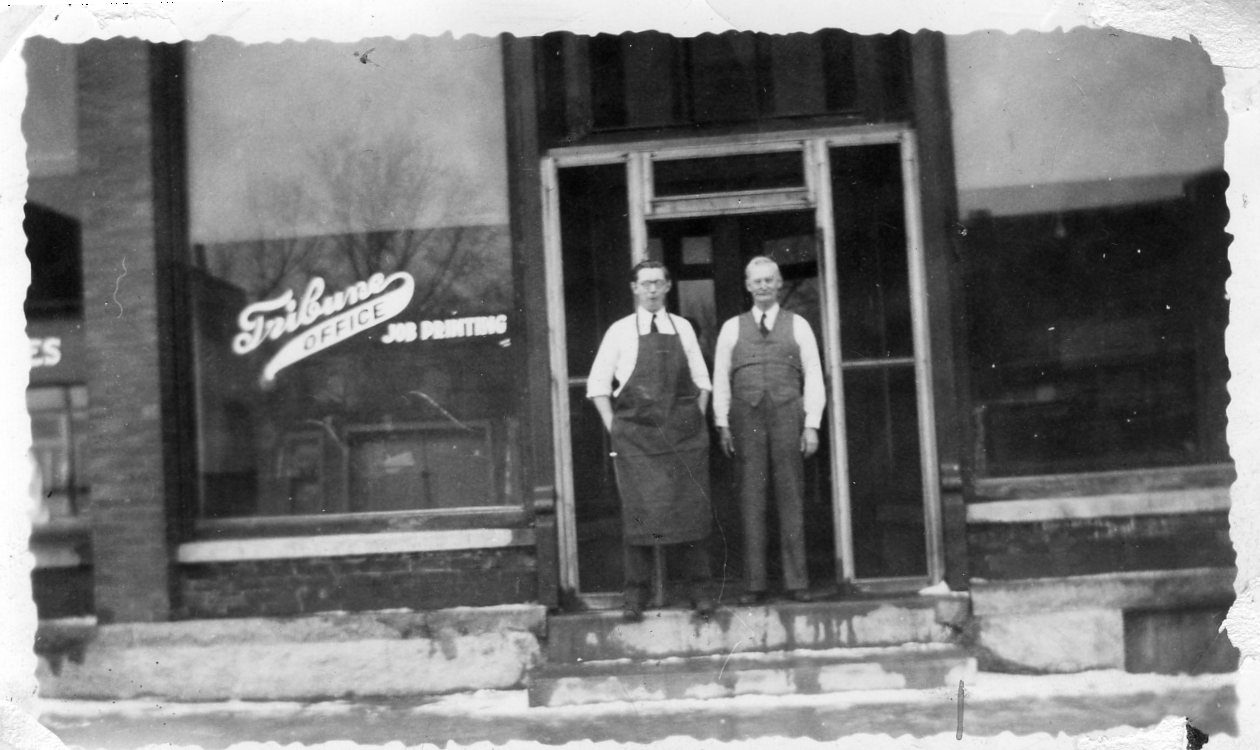
Before the move to their new quarters, the Tribune had been operated for several years in the building which also housed the Pritchard & Winter Men’s Clothing Store. The section of the building later housed Wilson for Women, a ladies’ store. The move into the 44’ x 80’ brick and stone structure was completed in February, 1952.
The below-ground part of the building housed several office spaces as well as complete photography rooms. The business office and an apartment for the Carmans were located on the ground floor.
In February, 1951, Merlyn R. Elman entered the Newspaper Production Course operated at the University of Iowa in cooperation with the College of Journalism and after his graduation in late May of that year, joined the Tribune staff on June 8, 1951, shortly before the move was made to the new building. Also employed at the Tribune at that time were Knut Herem and Sam Swartz as printers.
Following the death of George Carman on Memorial Day, 1964, Mrs. Carman completed arrangements with Merlyn R. Elman, who had been with them for 13 years as printer and shop foreman, and Harold F. Yahnke to establish a three-way partnership to continue publishing the Tribune, as of September 1, 1964.
Yahnke decided to leave the arrangement several months later and Elman and Mrs. Carman continued as publishers of the Tribune.
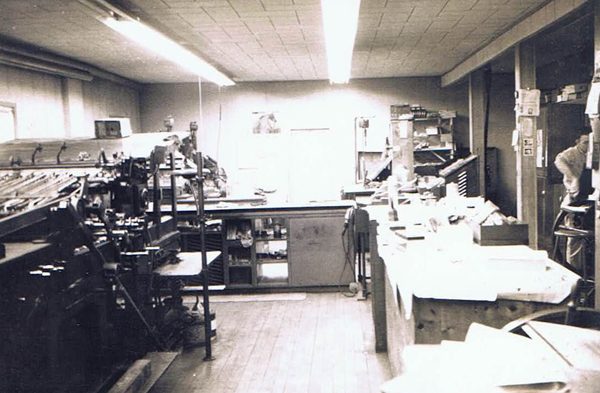
In 1970 Elman purchased the business from Mrs. Carman and she continued as office manager. On September 30, 1975, Mrs. Carman married R. E. Aukes and several months later opted for retirement with her position taken over by Sharon Beenken (now Sharon Bosma) with Elman as publisher.
In 1968 a young high schooler, Alan Carson, became associated with the Tribune as “printer’s devil.” He and Mrs. Bosma continue as the two full-time employees at the newspaper office. The staff has been completed over the years by several other people in part-time employ who are vital to the ongoing production of a newspaper in their various responsibilities.
Early in 1976 Elman began negotiations with CompuGraphic, a company manufacturing and selling printing equipment for offset. Two machines, a 7200I and a Compugraphic Junior were installed and the new method of setting type for the newspaper was ushered in.
On April 22, 1976, the first issue of the Tribune, using the offset method was printed at the central plant of the Summit in Forest City. Carson soon became the shop foreman and commercial printer operating the offset press, plate-maker and commercial darkroom which was built in the composing room in the space once occupied by the Miehle II.
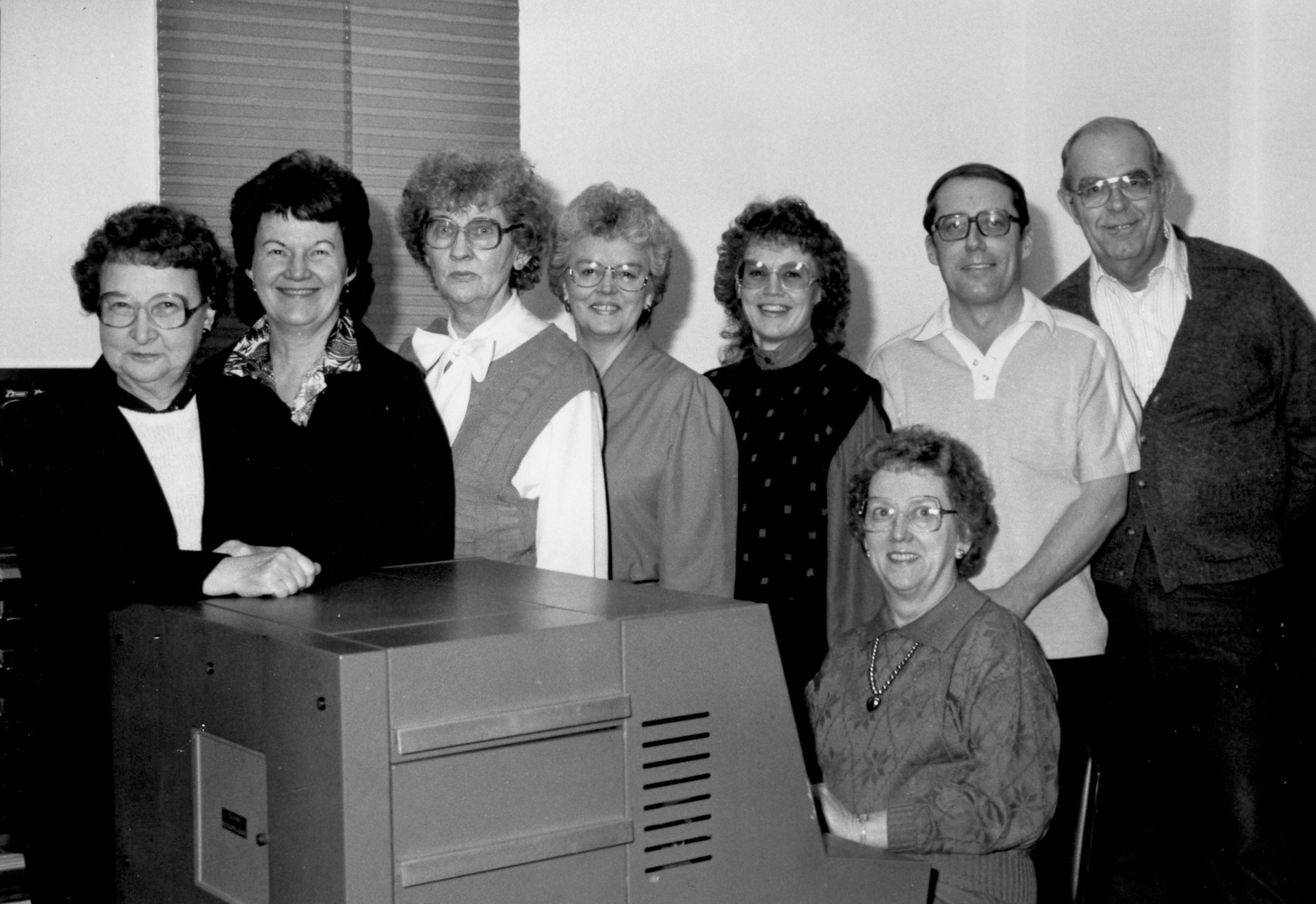
Eventually, the computer took over as replacement for the CompuGraphic offset typesetting machines.
Elman continued on as publisher and editor until his death on May 11, 2007. He spent over 56 years at the newspaper and 37 years as publisher and editor.
After Elman’s passing, Lanita Kardoes, who had served as office manager of the Tribune was named the managing editor.
On April 30, 2009, it was announced that the Tribune had been sold to Mid-America Publishing based in Hampton, IA.
The Forest City Summit
The Forest City Summit, which was one of Iowa’s longest-running community newspapers, ended its publication in October 2025 after serving Forest City and Winnebago County for more than 160 years.
Founded in 1857 by brothers David and Levi T. Johnson, the newspaper chronicled Forest City’s growth from a frontier settlement into a modern Midwestern community. Its pages carried accounts of local government, schools, agriculture, business, and community life, reflecting the evolving character of northern Iowa.
Over the decades, the Summit operated under several titles—including the Winnebago Summit and the Summit-Tribune, as it merged with or succeeded related publications. Despite those name changes, the paper maintained a continuous thread of local journalism centered on Forest City.
According to the Winnebago Historical Society, issues dating from 1871 to 2018 are available in digital form, while bound volumes are preserved in a fireproof addition at Forest City’s Mansion Museum. Collections at OldNews.com contain more than 14,000 scanned pages from 1904 onward, and Ancestry.com includes searchable issues for genealogical research. These digitized archives reveal a history of continuous publication from the late 19th century through the early 21st century.
The Summit’s role in documenting everyday life—elections, celebrations, hardships, and change—cemented its reputation as the enduring record of Forest City’s civic story. Though its presses stopped in 2025, the Forest City Summit remains preserved in print and digital archives, ensuring that more than a century and a half of local history continues to be accessible to readers and researchers. And coverage of Forest City news continues unbroken, through the Winnebago County Tribune.