By Casey Jarmes
Often in this column, I have written about military history; this is not done out of an excess of nationalism, but rather because military history is the type of thing that locals write down in detail. Last week, I wrote of Emory Pike, a WWI Medal of Honor recipient from Sigourney. This week and the next, I am again recounting the story of a WWI veteran, with a bit of a twist. I’ll be relaying the story of Bob Molkenthin, a German WWI veteran, who was interviewed by the Keokuk County News in 1929, providing an interesting perspective on the Great War, from the other side.
Robert Molkenthin was born in Niu Klunkwitz, Germany, in 1890. He attended school until he was 14, then spent two years working on the railroad, saving money to learn to be a machinist. After three years of practical experience, with six hours a week of “book learning,” he was acclaimed as a full-fledged machinist. Molkenthin move to Berlin, where he began working in an automobile factory.
In 1914, the War to End All Wars began. Molkenthin was drafted and put to work in an airplane motor factory. Work was difficult, with Molkenthin and two other men compelled to assemble three engines every seven days, working seventeen or eighteen hours every day. Molkenthin was paid well, making 250 marks a week (roughly $2,000, with inflation), but his living expenses were high. He often snuck away to the country, to buy food directly from farmers, something that was illegal, due to laws that required all surplus crops be sent to the front.
As the war went on, and airplanes became more vital, Molkenthin’s superior ordered them to begin assembling three engines in only six days. Molkenthin told him he would not do this. His superiors “coerced and cajoled” Molkenthin, but he still refused, so they sent him to the Front. The fact that Molkenthin was too valuable of a mechanic was the only thing that saved him from prison.
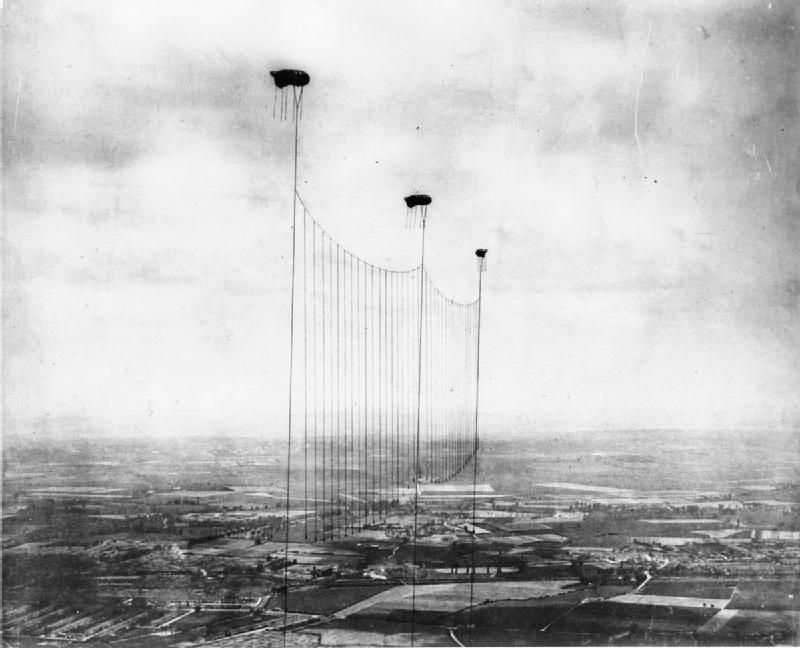
After arriving at the Western Front, Molkenthin spent times in trenches only a hundred yards away from enemy soldiers. He was trained in maintaining Zeppelin motors. He told the Keokuk County News that the Zeppelins were not very practical, due to being slower than airplanes and incapable of beating planes in air battles. He did mention a fascinating military tactic I’d never heard: barrage balloons, unmanned Zeppelins connected to each other and the ground with steel cables, creating massive nets in the sky that airplanes would crash into. Molkenthin explained that the Zeppelins became better, after they began adding canons to them, but that the government stopped building them after rubber and aluminum supplies ran low.
Molkenthin said that, once, three Zeppelins, containing a number of his friends, left the camp for an attack on England; only one balloon came back. During his time on the Western Front, he and the other mechanics at the camp were each assigned a partner, who they worked with and ate together every day. Molkenthin became very close with his partner, becoming “more like brothers than army comrades,” to quote the Keokuk County News. If one member of the pair was not feeling well one day, the other would do extra work for him. One night, the British managed to drive the German frontline back fifty miles. As Molkenthin was fleeing, his partner running only twenty feet away apart from him, Molkenthin watched as his brother in arms was obliterated by an English artillery shell.
“He was the best friend I ever had,” Molkenthin said, crying, more than a decade later. “He would do anything for me. I ran over to where he lay, despite the urgings of my companions to keep going. After one look, I knew that he was dead and that I could do nothing for him. After that, I grew listless, doing my work automatically and caring not what was going on at the Front. Even before the loss of my companion, the war seemed one great horrible massacre to me. I believe that the only thing that kept me going was my work with machinery. I would rather work with machinery than do anything else.”
War is a truly horrible thing, I think, and few wars exemplified this fact greater than World War I. There’s something harrowing, about being reminded about the humanity of someone who fought against the United States. Molkenthin fought, albeit indirectly, to kill soldiers from America and its allied nations, because he was drafted by his government. He fought for his country. He lost people who cared about, to the brave soldiers of our side. Reading about the experiences of someone on the other side makes the whole war feel arbitrary, senseless slaughter for military goals that, I would bet, Molkenthin could not articulate.
Molkenthin left the Western Front in 1916, but, his troubles were far from over. He was sent to Austria, where he entered combat for the first time, against the fearsome Russian army. But, this cliffhanger will have to wait another week before being resolved.