By Casey Jarmes
The Medal of Honor is the most distinguished decoration awarded to members of the United States Military, awarded to service members who show “conspicuous gallantry and intrepidity at the risk of life above and beyond the call of duty.” 3,547 Medals of Honor have been awarded in American history. 126 of these were awarded during the First World War. And, one of these was awarded to a man from Sigourney.
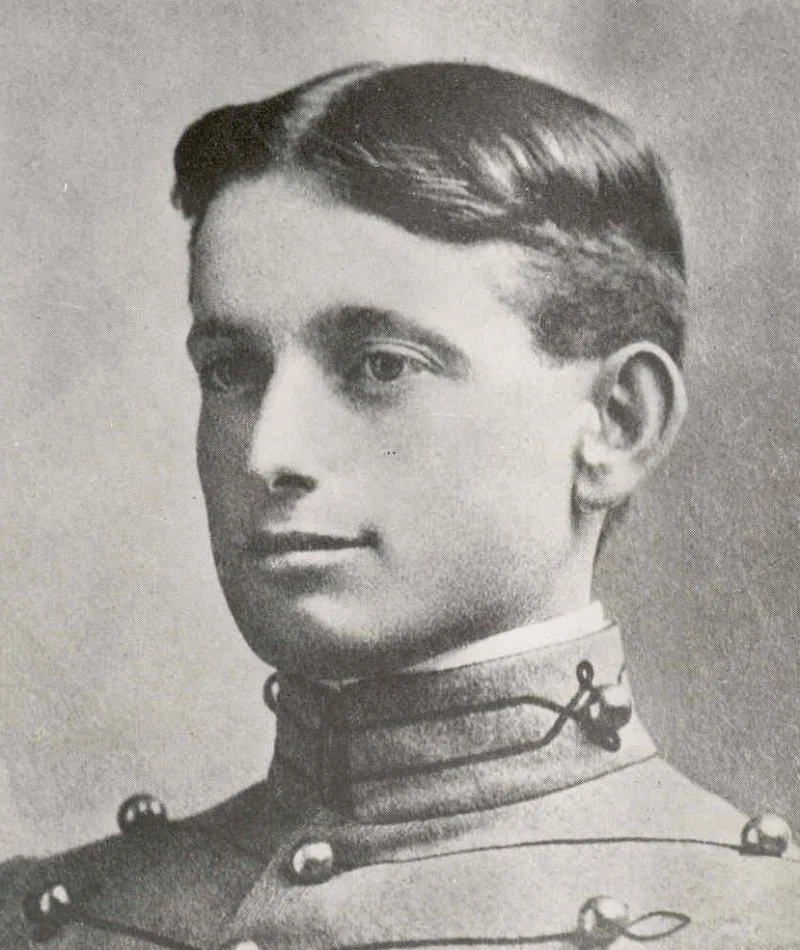
Emory Jenison Pike was born in Columbia City, Iowa, on December 17, 1876. His ancestors were “of old Revolutionary stock,” to quote an 1897 paper. One of his ancestors, Robert Pike, took depositions during the Salem Witch Trials and was a vocal critic of the whole affair. Emory Pike’s great-uncle, Zebulon Pike, was an explorer who mapped out part of the Louisiana Purchase and served as a Brigadier General during the War of 1812. Emory’s father, E.J. Pike, fought during the American Civil War, then became a Methodist Minister.
I am not certain of the year, but eventually, the Pikes moved to Sigourney, where Emory graduated from Sigourney High School. After graduating in 1894, he worked as a teacher for a few years in Keokuk County. In 1897, Congressman John F. Lacey appointed Pike to fill a vacancy at West Point, after his previous appointee, Rufus McVicker, resigned from the school.
A 1897 issue of the Keokuk County News wrote that “Emory Pike is whole-souled and a perfect gentleman. To those who know him these words of praise from us are but superfluous. Emory makes friends of everyone. The many good qualities that have been manifest in him in the past cannot fail to receive due recognition in the nation’s great school of honorable cadets. In good time Emory will be a popular man in the Corps. He has but to maintain the good character that he had builded and to apply himself with the assiduity with which he is already wont to climb the rugged ways of learning, and success is his goal. His future is assured.”
Pike graduated from West Point in 1901 and spent the rest of his life with the army, serving tours in Cuba, the Philippines, and at the Mexican-American border.
In April, 1918, Pike, then a 40-year-old Lieutenant-Colonel, was sent to fight in Europe alongside the 82nd Division, nicknamed the “All American” Division. In May, the 82nd arrived in France. On September 12, the Battle of Saint-Mihiel broke out in northeast France, with Americans fighting to retake territory that had been taken by Germany in 1914. On September 15, near the small French town Vandières, Pike charged forward, during heavy artillery shelling, to scout new positions for machine gunners. After the American troops were disorganized and scattered during the shelling, Pike volunteered to reorganize the advanced infantry units. He was only able to locate about 20 men. They advanced, joining up with other infantry platoons and establishing outposts. Pike is noted to have encouraged the other soldiers through his excessive cheeriness, in spite of the extreme danger.
Said danger reared its head when a shell hit Pike’s outpost, wounding one of his privates. Pike immediately rushed out of cover to the private’s aid. Then, as he was attempting to drag the wounded man to safety, another shell exploded, right next to Pike. The Lieutenant-Colonel was gravely wounded, suffering heavy damage to his left arm and left leg.
Yet, Pike continued fighting, commanding his men in battle, while retaining his “jovial manner of encouragement” he was famous for until their position could be held and the wounded could be removed, according to his Medal of Honor citation. Said citation reads that “the entire operation was carried on under terrific bombardment, and the example of courage and devotion to duty, as set by Colonel Pike, established the highest standard of morale and confidence to all under his charge.”
Pike died of his injuries the next day. He was buried in France, then later moved to a cemetery in Des Moines. Pike was awarded the Medal of Honor posthumously, for “conspicuous gallantry and intrepidity above and beyond the call of duty in action with the enemy,” according to the citation. The Medal of Honor was given to Pike’s daughter, Martha, on his behalf. After Pike’s death, Major General Jonathan M. Wainwright, wrote to Pike’s mother, to inform her of her son’s death, saying “When my time comes I only hope I can die as gallantly as did your son.” Wainwright would later command Allied forces in the Philippines during World War II, spend three years as a Japanese POW, and be awarded the Medal of Honor himself.